
Complex projects don’t fail because teams lack data. They fail because they can’t coordinate around it.
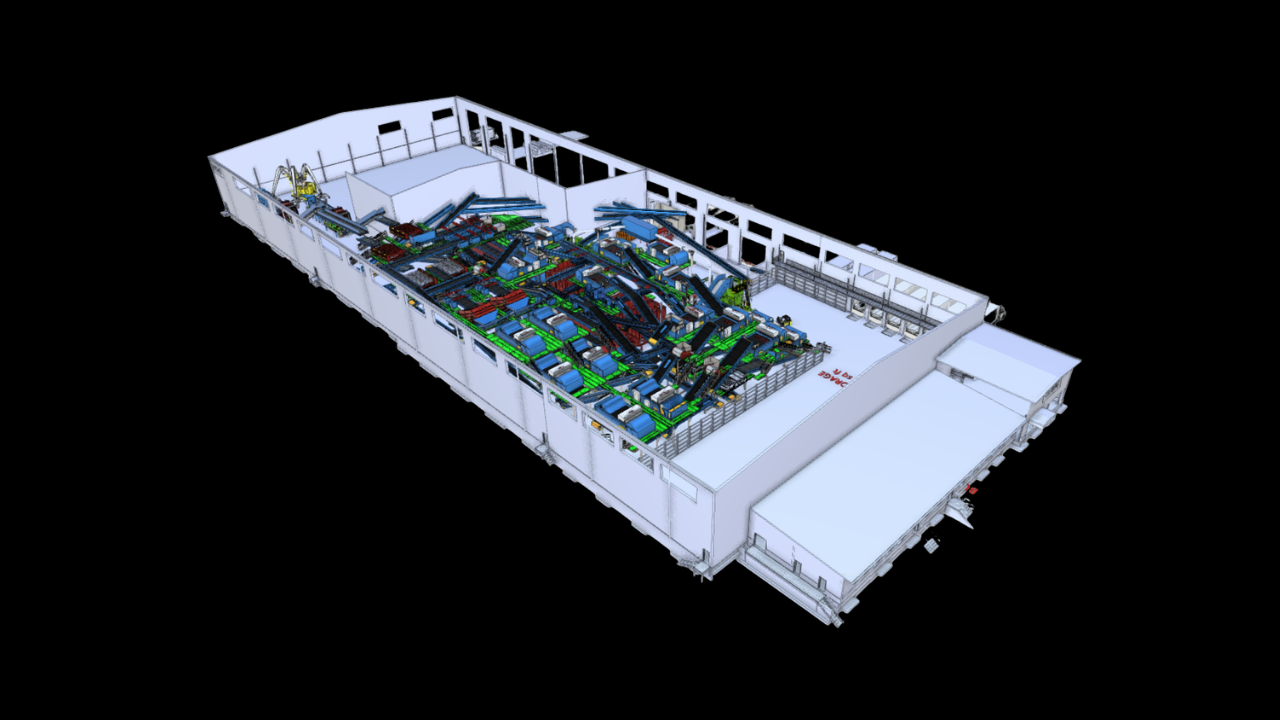
A recent industrial recycling facility project involved five companies working across Revit, AutoCAD, SolidWorks, and Tekla. Multiple platforms. Multiple disciplines. Multiple file formats. One project timeline.
This is how we built the coordination system that made it work.
Table of Contents
The Challenge: When Everyone Has Different Tools
This industrial recycling facility project involved five separate companies. Each brought their own software. Each worked in their own format. The structural team modeled in Revit. The equipment manufacturer designed in SolidWorks. The conveyor systems came through AutoCAD. The steel detailer worked in Tekla.
Multi-stakeholder projects create a coordination problem that file sharing can’t solve.
Every company had accurate data. The challenge was getting everyone working from the same version of reality.
When teams can’t see how their work affects other trades, coordination breaks down. Equipment arrives that conflicts with structure. MEP routing clashes with conveyor paths. Install sequences don’t account for access constraints.
The cost of these conflicts compounds. What starts as a drawing mismatch becomes a fabrication error. What begins as a coordination gap becomes a field rework cycle.
For industrial facilities like materials recovery facilities, the stakes are higher. Downtime during commissioning costs revenue. Delays in equipment installation extend project schedules. Field conflicts discovered during startup can halt progress entirely.
This project needed more than models. It needed a coordination system that kept five companies synchronized across four software platforms throughout the entire project.
The Infrastructure We Built
Coordination infrastructure starts before any fabrication decisions get made.
Our first step was establishing a BIM Execution Plan (BEP). This wasn’t a generic template. It was a project-specific document that defined how coordination would actually work.
The BEP covered three critical areas. Standards determined how models would be structured, what level of detail was required, and how coordinate systems would align. Workflows outlined the sequence for model submission, clash detection cycles, and issue resolution processes. QA/QC procedures established validation checkpoints before fabrication and defined responsibilities for each trade.
With standards in place, we configured Autodesk Construction Cloud (ACC) as the centralized coordination platform.
ACC became the single location where all teams accessed current coordination data. We set up user roles and permissions so each company could see what they needed without compromising project data. Folder structure followed the coordination workflow. Naming conventions ensured files were identifiable across all trades.
The key was model federation. We didn’t ask trades to abandon their native software. Instead, we collected models from all teams, aligned coordinate systems across platforms, and created a unified coordination environment where everyone could see how their work integrated with other disciplines.
This federated approach meant the structural engineer still worked in Revit. The equipment manufacturer still designed in SolidWorks. The conveyor supplier still used AutoCAD. The steel detailer continued in Tekla. But everyone coordinated in the same space.
The Coordination Process: From Conflicts to Clarity
Coordination infrastructure creates the foundation. The coordination process is what catches issues before they reach the field.
Initial clash detection identified 101 conflicts in the first coordination round. These weren’t minor clearance issues. They were fundamental conflicts between major building systems.
Equipment foundations clashed with structural columns. Conveyor routing conflicted with overhead utilities. Access paths required for maintenance weren’t validated against actual clearances. MEP systems routed through spaces where process equipment would eventually install.
Each clash got documented in Navisworks with screenshots, affected disciplines, and severity ratings. We prioritized conflicts by impact on schedule and cost. Critical path issues got resolved first. Secondary clearance problems followed.
What made the process work was the coordination cycle. Every two weeks, trades submitted updated models. We ran clash detection against the federated model. Issues got assigned to responsible parties. Resolution status tracked in ACC. The cycle repeated until conflicts dropped to acceptable levels.
By the fourth coordination round, clashes decreased to 12. By the sixth round, remaining conflicts were minor clearance adjustments that could be field-verified during installation.
Real-time owner oversight changed how the facility owner engaged with the project. Traditionally, owners see coordination status through monthly reports and static PDFs. On this project, the owner had direct access to the live federated model.
We conducted training sessions on BIM workflows. The owner’s staff learned how to navigate the ACC workspace, review coordination status, and access model data from mobile devices in the field. During site visits, they could compare field conditions against the coordination model in real time.
This visibility created accountability. When equipment didn’t match submittal drawings, the owner could reference the coordinated model. When field modifications were proposed, they could check impacts against other trades before approving changes.
The centralized coordination hub meant everyone worked from the same federated model with full visibility into coordination status. No one was working from outdated information. No trade was designing in isolation. Every decision could be validated against the integrated model before fabrication began.
What Made It Work
Coordination systems fail when they’re implemented too late.
Early involvement was critical. We didn’t start coordinating after fabrication drawings were complete. Coordination infrastructure was in place before any equipment was ordered. This meant conflicts surfaced when they were still manageable, when design changes didn’t trigger rework cycles, when fabrication schedules hadn’t locked in.
Clear accountability prevented coordination gaps. Each trade knew exactly what they were responsible for submitting, when models were due, what level of detail was required, and how issues would be resolved when conflicts emerged.
The BEP wasn’t a document that got filed and forgotten. It was the operational manual that kept five companies synchronized. When questions arose about coordinate systems, the BEP had the answer. When disputes occurred over model accuracy, the BEP defined the standard. When schedule pressure threatened to skip coordination cycles, the BEP enforced the process.
Continuous validation caught problems before they compounded. Regular clash detection cycles meant issues didn’t accumulate. Design reviews involved all affected trades. Field verification confirmed that as-built conditions matched coordination assumptions.
This systematic approach worked because it didn’t rely on any single person maintaining coordination. The infrastructure enforced the process. The tools automated validation. The workflow created accountability.
The Outcome: Turnkey Coordination Delivers Results
Complex projects need more than accurate models. They need coordination systems that actually work.
The project owner received a complete coordination package. The BIM Execution Plan documented standards, workflows, and responsibilities. The configured ACC workspace provided centralized access with proper permissions and structure. The federated coordination model showed how all trades integrated. Initial clash reports identified 101 conflicts before fabrication, with documentation and resolution tracking. Training equipped the owner’s staff to leverage coordination data throughout construction.
When your project involves five companies across multiple platforms, file sharing isn’t coordination. Real coordination requires infrastructure that keeps everyone synchronized, processes that catch conflicts before fabrication, and systems that maintain a single source of truth throughout the project.
This is what turnkey means. One partner for accurate data and the coordination system that makes that data useful.
For general contractors managing multi-trade coordination, this approach reduces field conflicts and creates clear accountability across disciplines. For engineering firms designing complex industrial facilities, federated coordination validates that systems integrate before fabrication begins. For owners investing in capital projects, centralized oversight provides visibility into coordination status and confidence that the design can actually be built.
Multi-software coordination succeeds when infrastructure comes first, when processes enforce validation, and when accountability is built into the workflow from day one.
Ready to Build Coordination Infrastructure for Your Complex Project?
Managing a project with multiple stakeholders across different software platforms? We specialize in building the coordination systems that keep teams synchronized.
Contact OAR Scanning to discuss your coordination infrastructure needs.
FAQs
What is multi-software coordination in construction?
Multi-software coordination is the process of integrating models and data from different design platforms (like Revit, AutoCAD, SolidWorks, Tekla) into a unified coordination environment where all trades can detect conflicts and validate integration before fabrication.
How does federated model coordination work?
Federated model coordination collects models from all project disciplines, aligns coordinate systems across different software platforms, and creates a unified environment where teams can perform clash detection and coordination reviews without requiring everyone to use the same design software.
What is a BIM Execution Plan?
A BIM Execution Plan (BEP) is a project-specific document that defines coordination standards, workflows, responsibilities, and QA/QC processes. It ensures all project stakeholders understand how coordination will work, what deliverables are required, and how issues will be resolved.
Why use Autodesk Construction Cloud for coordination?
Autodesk Construction Cloud (ACC) provides a centralized platform where multi-discipline teams can access current coordination data, review federated models, track issue resolution, and maintain version control across different software platforms in one unified workspace.
How many clash detection cycles are typical for complex projects?
Complex multi-trade projects typically require 4-8 coordination cycles depending on project complexity. Initial rounds often identify 50-100+ conflicts. With systematic coordination, conflicts decrease significantly by later cycles as design integration improves.